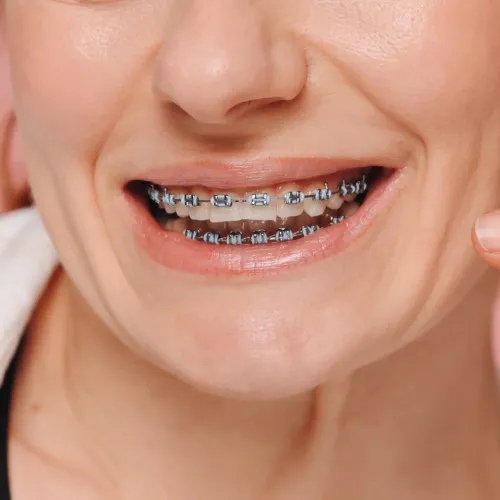
Ceramic Braces, Invisalign, and Retainers: The Downsides Nobody Talks About
Uncover the hidden downsides of ceramic braces, Invisalign, and retainers. Get honest orthodontic facts to make the best choice. Read our guide today!
Read More

Cosmetic Dentistry, Teeth Straightening
Medically Reviewed by Dr. Ali Tameemi
Every orthodontic option — ceramic braces, Invisalign, and retainers — comes with trade-offs that go well beyond staining and price. Understanding the real mechanical risks helps you make a smarter decision before treatment starts. If you're still weighing your choices, our dentistry blog covers a wide range of orthodontic topics to help you get informed.
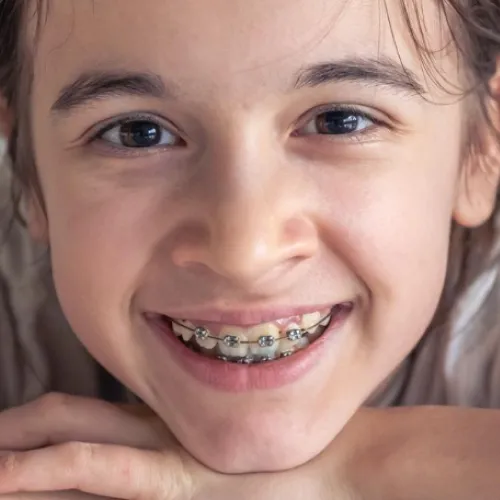
Ceramic braces look subtle. That's their appeal. For Missouri City patients weighing their choices, there's a clinical downside that rarely makes it into patient conversations: ceramic is harder than your natural tooth enamel.
According to WebMD, ceramic brackets are made from aluminum oxide rated 9 out of 10 on the Mohs hardness scale — just below diamonds. Natural enamel sits around 5. That gap matters enormously if you have a deep bite, because your lower teeth are literally grinding against a surface harder than themselves every time you chew. The result is irreversible enamel wear on opposing teeth. This is why many orthodontists avoid placing ceramic brackets on lower arches for patients with significant overbites.
Removal creates a second risk. Metal brackets flex slightly during debonding, releasing cleanly. Ceramic doesn't flex — it fractures. When a ceramic bracket cracks during removal, the force transfers directly to the enamel underneath, creating micro-fractures or enamel tear-outs. Orthodontists must use specialized drills and carbide burs to carefully reduce the bracket before debonding, a step that takes considerably more time and precision than standard metal removal.
Beyond these structural concerns, Healthline's overview of ceramic braces notes that ceramic brackets are more than twice as likely to break or fracture during treatment compared to metal, and that elastic ties can stain with coffee, tea, or curry — remaining discolored until the next appointment replaces them. If you're curious about early braces complications and how to spot them, it's worth reviewing before you commit to any fixed appliance.
Ceramic braces do offer genuine advantages: they're less visible, MRI-safe, and suitable for complex cases that clear aligners can't address. But the enamel hardness issue is a real clinical consideration worth raising with your orthodontist before committing.
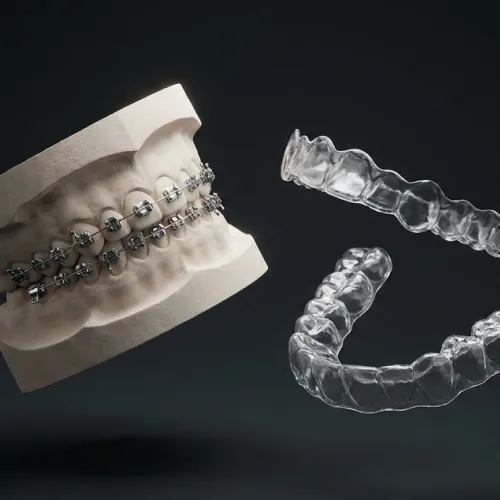
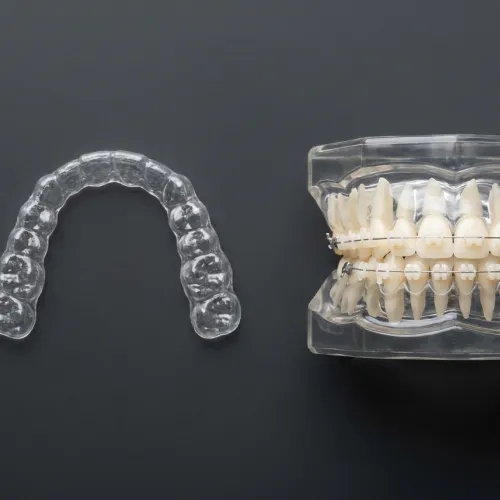
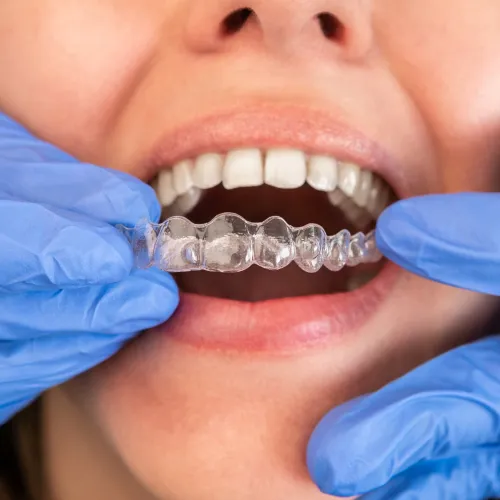
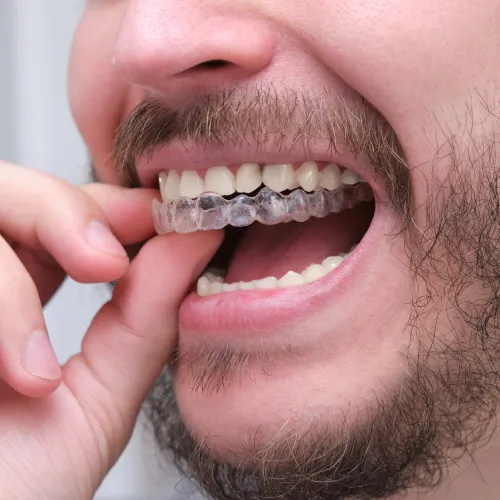
The most commonly cited Invisalign downside is that you have to remember to wear the trays. That's true — Healthline's guide on Invisalign effectiveness confirms the aligners must be worn 20 to 22 hours daily to work — but there's a more significant mechanical complication that rarely gets explained upfront. Understanding what really affects Invisalign results can help you set realistic expectations before treatment begins.
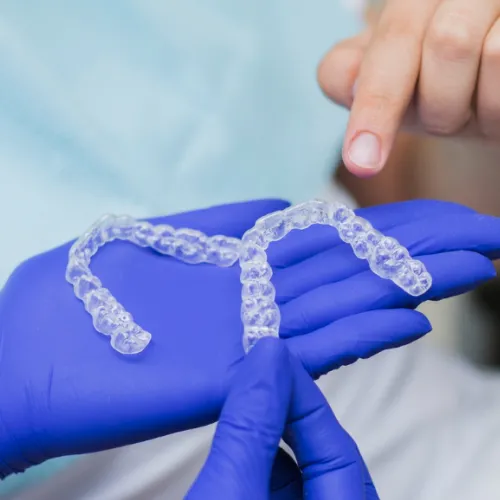
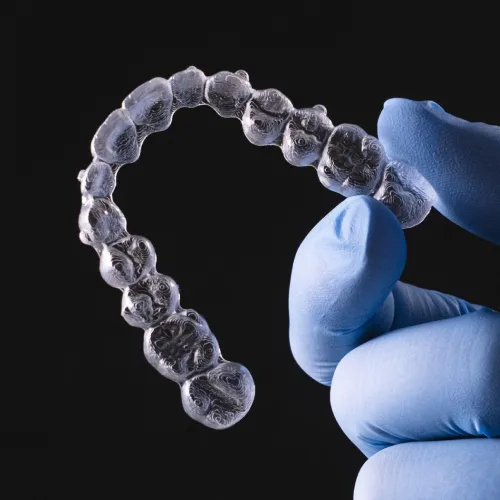
Each aligner tray is roughly 0.75mm thick. When worn across all teeth for 22 hours a day, that plastic sits between your upper and lower molars like a constant bite block. Over months of treatment, this unintentional pressure can intrude the posterior teeth — pushing them slightly upward into the jaw — so that when the aligners come out, your back molars no longer make contact. You can feel it immediately: your front teeth touch, but chewing on your back teeth feels off or impossible.
This is called posterior open bite, and it's one of the more frustrating outcomes of aligner treatment. The fix usually involves a "settling" phase where the backs of the final aligners are trimmed away, allowing the posterior teeth to erupt back down. In more pronounced cases, additional refinement trays are ordered — adding weeks or months to the original timeline.
A Harvard Health article on tooth movement and retainers reinforces that teeth respond continuously to pressure, which is precisely why the bite-block effect of aligner thickness isn't trivial. It's an expected biomechanical consequence, not a rare complication.
Other legitimate Invisalign downsides include mild pain with each new tray (typically peaking in the first week), the possibility of losing or cracking removable trays, and the fact that severe crowding or complex bite corrections still often require traditional braces. Patients dealing with more involved alignment issues may want to explore how Invisalign versus braces for complex orthodontic cases compares before deciding.
Retainers — removable or permanent — are essential for maintaining the results of any orthodontic treatment. Harvard Health notes that without them, teeth continue shifting throughout life, leading to crowding, gaps, and bite degradation.
But permanent (bonded) retainers carry a specific risk that almost no patient resource addresses: Wire Syndrome.
A bonded lingual wire is passive when first placed. It holds teeth in position without applying any force. Over time, normal chewing and biting can subtly distort the wire. Once distorted, it stops being passive — it becomes an active orthodontic appliance, silently applying torque to individual tooth roots. That torque can push a root outward through the labial cortical bone, causing bone dehiscence and gum recession that looks unrelated to the retainer because the wire still appears attached.
Warning signs are easy to miss. A single tooth rotating slightly when everything else looks stable is a red flag. Localized gum recession on one lower incisor — without obvious hygiene problems — warrants immediate examination of the wire. Patients can do a basic self-check by running a fingernail gently along the wire: any bend, kink, or raised section that wasn't there before should prompt an orthodontic appointment before root damage progresses.
Healthline's breakdown of retainer types also highlights that bonded retainers make flossing significantly harder, increasing plaque and tartar accumulation — a genuine concern for patients already prone to gum disease. Learning about clear aligners as an alternative path may be worthwhile for patients who want to avoid the long-term maintenance challenges of fixed appliances.
Removable retainers sidestep Wire Syndrome entirely but introduce their own challenges: they can be lost, cracked, or simply not worn consistently enough to prevent relapse. For many patients, a combination of both types — permanent on the lower arch with careful monitoring, removable on the upper — offers the best long-term protection.
Every orthodontic path involves real trade-offs. The right choice depends on your bite complexity, lifestyle, and long-term dental health — not just how the appliance looks.
Nu Dentistry Missouri serves patients throughout Missouri City and the Greater Houston area. Schedule a consultation to get straightforward guidance on which option actually fits your situation. You can also check our dental offer page to see current promotions that may apply to your treatment.
Medical disclaimer: This article is for informational purposes only and does not constitute professional dental or medical advice. Always consult a qualified dental professional for diagnosis and treatment recommendations specific to your situation.





Tuesday 9-6pm
Thursday 9-6pm
Friday 9-6pm
Saturday 9-3pm
8145 Highway 6, Building B #200, Missouri City, TX 77459
5706 San Felipe St Ste B-300, Houston, TX 77057
23227 Gosling Rd., Suite B, Spring, TX 77389
8940 Barker Cypress Rd., Cypress, TX 77433
3201 N. Shepherd Dr. Suite 113, Houston, TX 77018
11115 W Grand Parkway S, Suite 140, Richmond, TX 77407
PATIENT TESTIMONIALS Missouri City, TX
What people are saying after visiting our dental office



CARING DENTISTS Missouri City, TX
OUR SOCIALS
Check us out and follow our accounts on the following social media platforms....