Medically Reviewed by Dr. Ali Tameemi
Ceramic braces are genuinely less visible than metal, but the full picture is more nuanced than most patients realize. From slot friction that slows early alignment to debonding risks at the finish line, understanding the mechanics helps you choose the right option — and ask the right questions.
The Staining Myth: What's Actually Turning Yellow on Your Braces
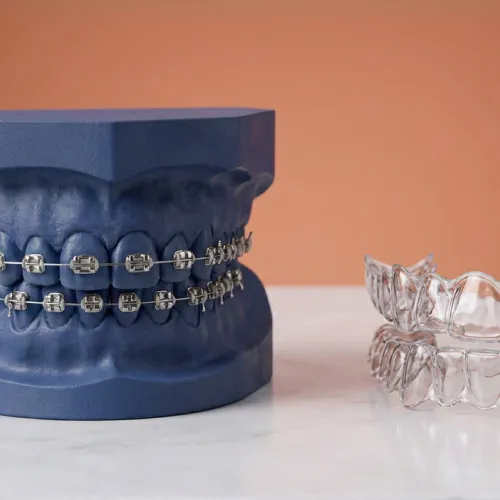
Patients choose ceramic braces for one reason above all else: they don't want a mouth full of metal. According to Healthline, ceramic brackets use clear or tooth-colored materials that blend far more naturally with enamel than gray metal hardware. That part is real. If you're still deciding between fixed appliances and removable options, our guide on choosing between Invisalign and braces in Missouri City TX covers the key trade-offs worth knowing before your consultation.
But here's where the story gets more interesting. Most patients who complain about "staining ceramic braces" are actually watching their elastic ligatures — the tiny polyurethane O-rings that hold the archwire to each bracket — absorb coffee, tea, curry, and red wine like a sponge. The ceramic bracket itself, made of polycrystalline or monocrystalline alumina, is virtually impervious to surface staining. Research published in PMC confirms that ceramic and zirconia brackets are engineered for chemical stability and high biocompatibility — they don't absorb pigments the way porous elastic bands do.
This distinction matters practically. Those elastic ligatures are replaced at every adjustment appointment, typically every four weeks. So if you indulge in stain-heavy foods in the three days leading up to your scheduled appointment, the discolored ties come off almost immediately anyway. Plan your coffee habits around that four-week window rather than eliminating them entirely.
Alternatively, ask your orthodontist about self-ligating ceramic brackets. These use a built-in clip mechanism instead of elastic ties entirely — no ligatures, no staining problem at all. A WebMD overview of ceramic braces notes that modern ceramic options have evolved significantly since their 1987 introduction, and self-ligating designs represent one of the most patient-friendly advances for aesthetics-conscious wearers.
Slot Friction: The Real Reason Ceramic Braces Can Slow Early Treatment
The question "do ceramic braces move teeth faster?" deserves a physics-based answer rather than a vague "they're about the same."
Here's the biomechanical reality: tooth movement in the early stages of orthodontic treatment relies heavily on sliding mechanics — the archwire gliding through bracket slots to align crowded or rotated teeth. When a metal archwire slides through a ceramic slot, it encounters significantly higher friction than it would inside a metal slot. The microscopic texture of ceramic creates drag against the smooth wire, a phenomenon called binding and notching. This resistance requires greater applied force to achieve movement, which can extend the early alignment phase.
Metal-lined ceramic brackets address this directly. These designs embed a small metal slot inside a ceramic body, giving you the tooth-colored exterior patients want while dramatically reducing the friction coefficient at the wire-bracket interface. Self-ligating ceramic systems take it further by eliminating the elastic ligature pressure on the archwire entirely, which Healthline's review of Damon braces explains allows teeth to shift with less resistance and potentially less discomfort.
For complex cases — severe crowding, significant bite correction — this friction gap can matter. For mild to moderate alignment issues, the clinical difference is often negligible. Patients dealing with bite-related concerns may also want to discover how to improve bite with braces in Missouri City TX to better understand what's involved in correcting functional issues alongside alignment. The key is having an honest conversation with your orthodontist about which bracket design makes sense for your specific tooth movement needs, not just your aesthetic preferences.
The Debonding Appointment: A Risk Most Patients Never Think to Ask About
Patients obsess over how braces look during treatment. Almost nobody thinks about what happens at the removal appointment.
Metal brackets are malleable. An orthodontist can apply a controlled deforming force with removal pliers, the bracket flexes slightly, and the adhesive bond breaks cleanly at the bracket-enamel interface. Ceramic brackets cannot flex. Because ceramic is harder and more brittle than stainless steel — and in some cases harder than enamel itself — they must be mechanically fractured or sheared off using specialized tension pliers. That process introduces a genuine risk: microscopic enamel tear-outs, surface cracks, and bracket shattering.
A quantitative analysis in PMC measured enamel loss following ceramic bracket debonding and found meaningful surface changes post-removal, with monocrystalline brackets tending to leave adhesive remnants on the tooth while polycrystalline brackets were more likely to leave bracket fragments. Both outcomes complicate the cleanup process.
Experienced orthodontists manage this risk with specific protocols: using finishing carbide burs to carefully remove adhesive residue rather than scraping, applying lower-friction bracket bases designed to fail at the adhesive layer rather than the enamel surface, and in some practices, using ultrasonic or laser-assisted debonding techniques. Patients who want to understand more about potential complications during orthodontic treatment can learn about early braces complications in Missouri City TX to know what warning signs to watch for.
Before committing to ceramic braces, ask your orthodontist directly: what debonding protocol do you use, and which bracket system minimizes enamel risk at removal? That question signals you're an informed patient — and it will get you a more detailed answer about the specific system being recommended for your case.
Are Ceramic Braces Actually Right for You?
Ceramic braces occupy a genuinely useful middle ground. They're more discreet than metal and more clinically powerful than clear aligners for complex cases. A study on adult perceptions of orthodontic appliances published in PMC found that ceramic braces ranked highly among aesthetics-conscious adults — significantly more acceptable than traditional metal brackets in most populations surveyed.
They make particular sense for adults in professional settings who need fixed appliance precision but want to minimize visibility. They're also MRI-compatible (assuming no metal components), which matters for patients who may need imaging during a multi-year treatment.
The honest disadvantages: they carry higher friction in standard configurations, require more careful oral hygiene around larger brackets, and introduce more complexity at removal than metal alternatives. For patients with very active lifestyles, contact sports involvement, or complex bite corrections requiring heavy mechanics, metal braces may still be the more clinically appropriate choice. Those weighing fixed appliances against removable systems may also find it helpful to find out the effectiveness of Invisalign in Missouri City TX as a point of comparison.
The best path forward is a thorough consultation — not a general article. Your bone structure, bite complexity, and treatment timeline all shape which bracket system will deliver the best outcome.
Ready to Explore Your Options in Missouri City?
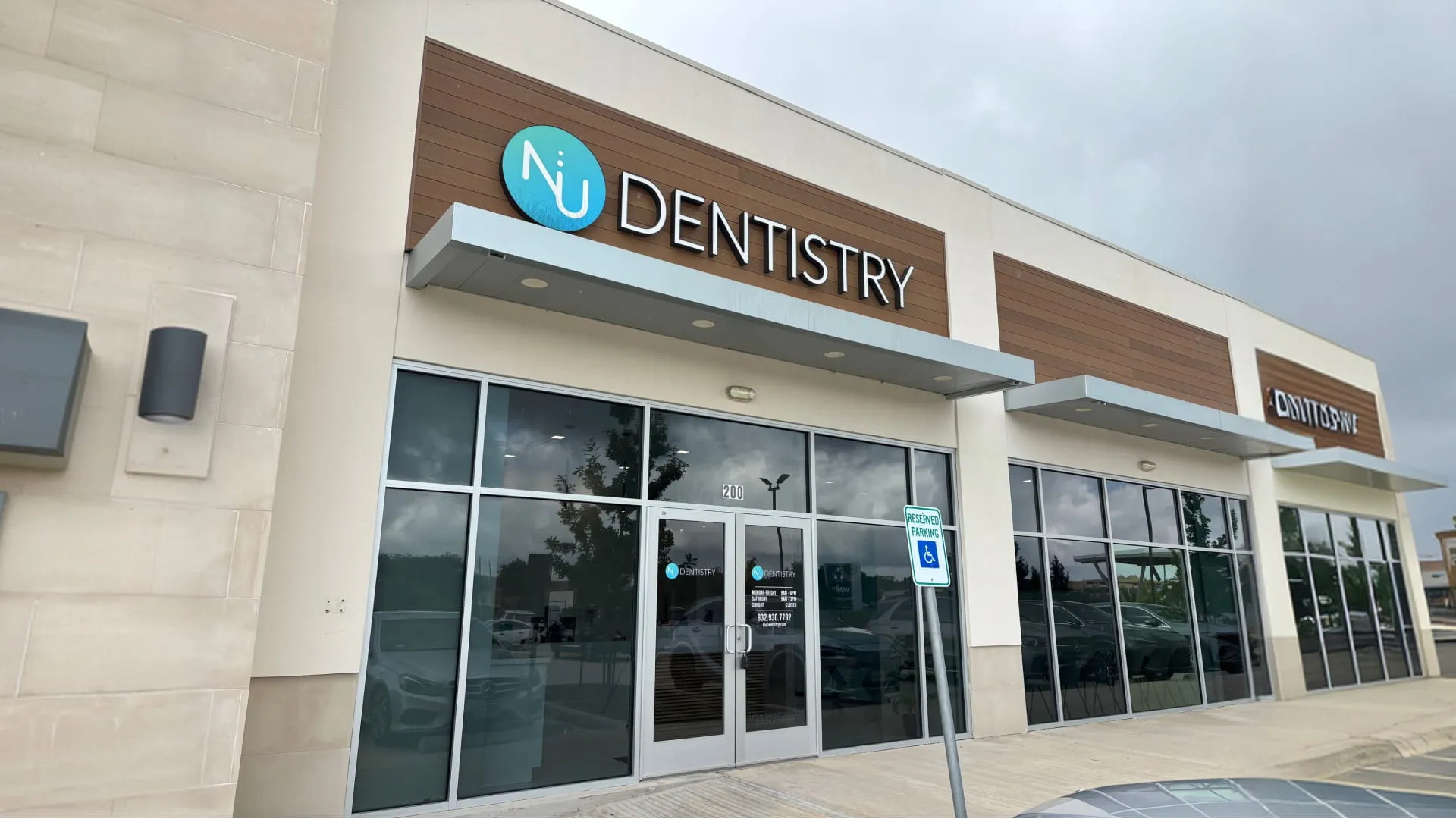
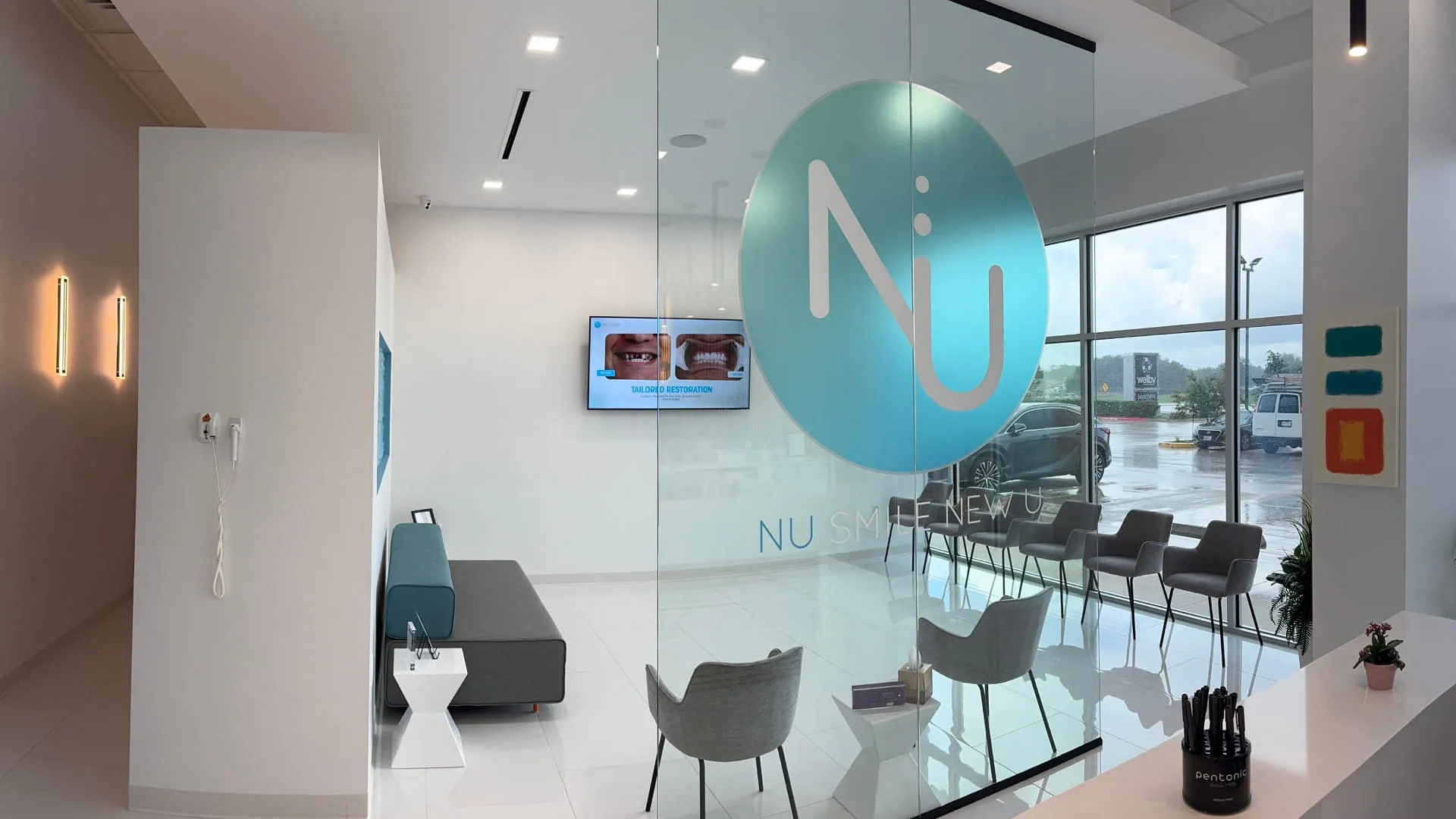
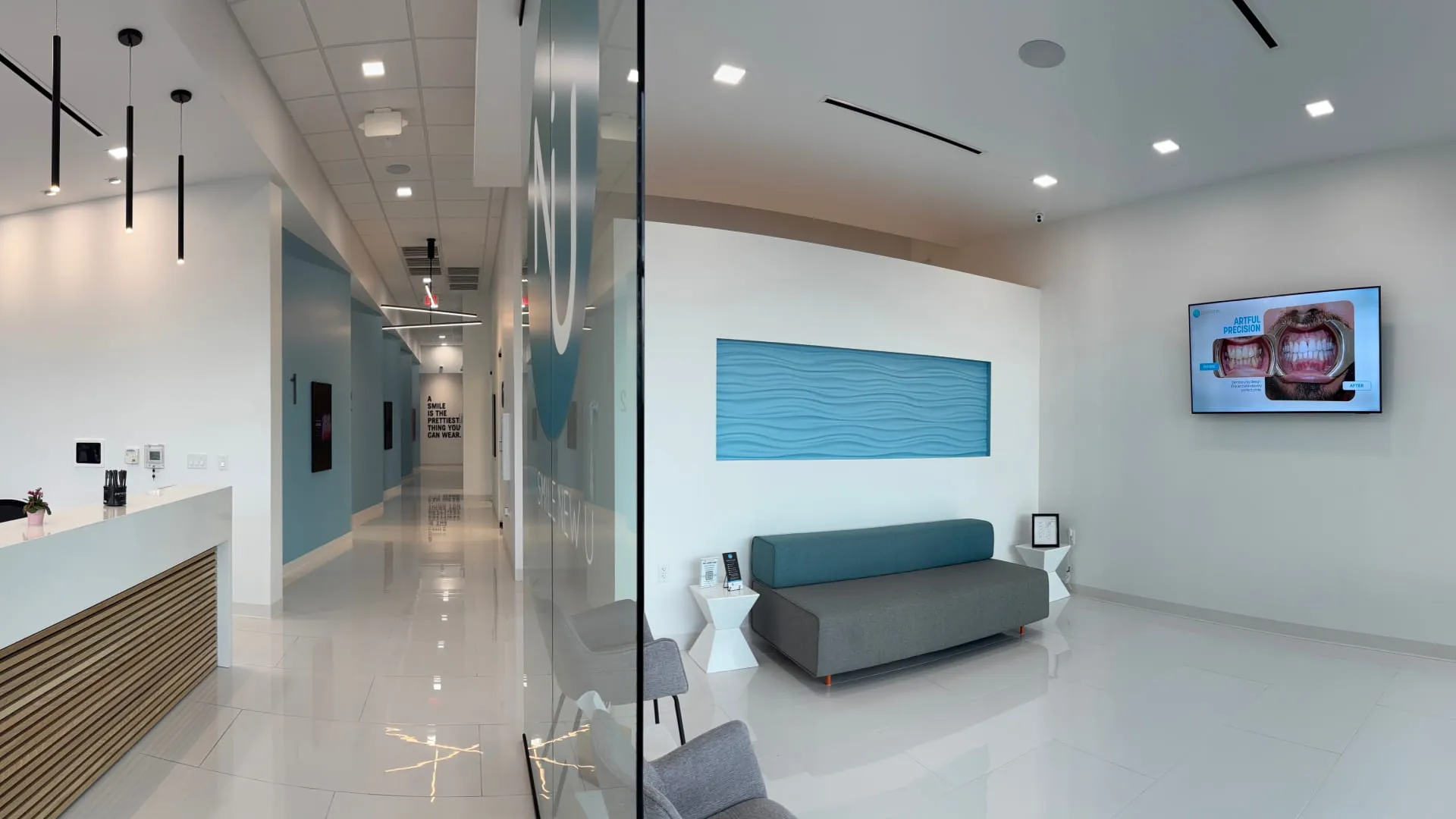
Nu Dentistry Missouri helps patients throughout Missouri City and the Greater Houston area make confident, informed decisions about orthodontic treatment. Whether you're weighing ceramic versus metal braces or exploring other alignment options, our team can walk through your specific case and explain exactly what to expect — including the details most patients never think to ask about.
Reach out to contact us and schedule your consultation to get a clear picture of what treatment looks like for you. Be sure to also check our dental offer for current savings available to new and returning patients.
Medical disclaimer: This article is intended for informational purposes only and does not constitute professional dental or medical advice. Always consult a licensed dental professional for diagnosis and treatment recommendations specific to your situation.










CARING DENTISTS Missouri City, TX
OUR SOCIALS
Check us out and follow our accounts on the following social media platforms....