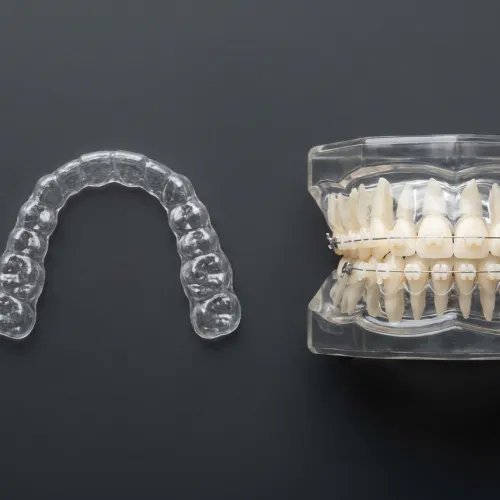
Invisalign vs. Ceramic Braces for Adults: Which Is Faster and More Effective?
Wondering if Invisalign is faster than ceramic braces for adults? Compare effectiveness and treatment times, then book your consultation with our team today!
Read More
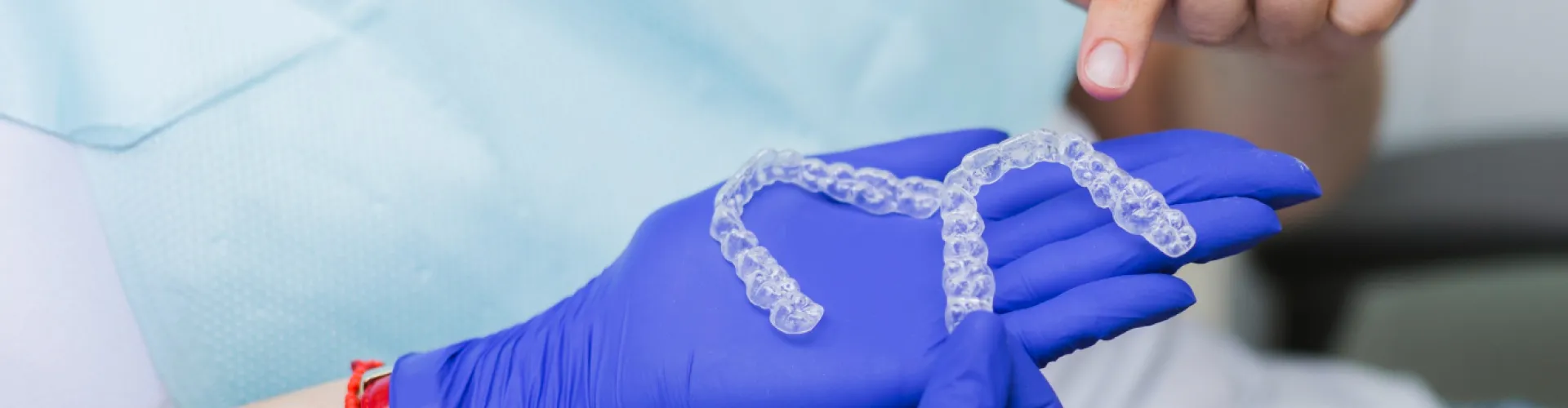
Cosmetic Dentistry, Teeth Straightening
Medically Reviewed by Dr. Ali Tameemi
Byte ceased operations in early 2024, leaving thousands of patients mid-treatment with no clinical support. If you were using Byte aligners, stopping abruptly carries real orthodontic risks — and your next step should be an in-office evaluation, not a wait-and-see approach.
Most coverage of Byte's closure focused on refunds and customer service. Far less attention went to what actually happens inside your mouth when aligner treatment halts mid-sequence. If you want to learn about clear aligners in Missouri City TX and how they work, understanding the clinical process is essential before choosing any aligner provider.
Abrupt cessation is not the same as finishing treatment. When teeth have been partially moved — shifted coronally but without completing root translation — they're in an unstable position. Without the next aligner in the sequence holding them, teeth can drift back rapidly, a process called periodontal relapse. In some cases, the relapse is faster than the original movement because the bone remodeling cycle was never allowed to complete.
More concerning: unmonitored movement can create traumatic occlusion, where teeth that were shifted now make premature contact in ways they didn't before. That kind of bite interference causes jaw pain, tooth wear, and in prolonged cases, temporomandibular dysfunction.
If you're a stranded Byte patient, here's what a qualified in-office orthodontist needs to assess before any rescue treatment begins:
The American Dental Association has been direct on this point: moving teeth without full knowledge of a patient's oral condition risks bone loss, lost teeth, receding gums, and permanent bite problems. That risk doesn't disappear when a company shuts down — it compounds.
The Byte-versus-Invisalign debate was often framed around convenience and speed. The more important difference was biomechanical — and it's central to understanding why Byte attracted regulatory scrutiny.
Byte relied on its HyperByte device, a high-frequency vibration tool worn alongside aligners, claimed to accelerate tooth movement. What vibration-based systems cannot replicate are SmartForce attachments — the small composite "buttons" an Invisalign provider bonds directly to specific teeth. Those attachments create precise force vectors that drive true bodily root translation: the root and crown move together as a unit.
Without physical attachments, aligners primarily produce coronal tipping — the crown tilts while the root lags behind. Over a short, minor-correction treatment, this may produce acceptable cosmetic results. Over a longer course, or with moderate complexity, coronal tipping without corresponding root movement increases the risk of cortical bone perforation and, in rare cases, tooth devitalization.
Healthline's overview of Invisalign notes that Invisalign aligners are made from SmartTrack thermoplastic and are engineered around a doctor-created 3D movement plan — a fundamentally different clinical model than a mail-order impression kit with no in-person exam. If you're weighing your options, find out the effectiveness of Invisalign in Missouri City TX to better understand what in-office aligner treatment can realistically achieve.
The absence of a licensed provider also meant no one was watching for these complications. That's the core issue the ADA raised, and it's why "just as good" was never an accurate comparison.
If you used dental insurance toward your Byte treatment, you may have a bigger problem than a stranded case. Many dental plans include a Lifetime Orthodontic Maximum (LOM) — a once-per-lifetime benefit, not an annual one. If your insurer processed Byte's claim under CDT code D8090 (comprehensive orthodontic treatment, adult) or D8999 (unspecified orthodontic procedure), that benefit may now show as exhausted — even though your treatment was never completed.
Here's what to do:
According to Healthline's breakdown of Invisalign costs, insurance can offset a meaningful portion of in-office aligner treatment. Recovering your LOM eligibility — even partially — could significantly change what rescue treatment looks like for your budget. It's also worth checking whether a dental offer is available to help offset the cost of restarting your orthodontic care.
Short answer: don't continue wearing Byte aligners without professional guidance. Without a supervising provider, there's no one to confirm whether your current aligner still fits correctly, whether you've reached a stable stopping point, or whether your teeth have shifted enough to make the next tray in your set contraindicated.
A Healthline guide on removable braces notes that direct-to-consumer companies can miss bite issues precisely because impressions are self-taken rather than performed by trained dental technicians. That diagnostic gap existed before Byte closed — it's simply more consequential now. Understanding what really affects Invisalign results in Missouri City TX — including provider oversight and proper monitoring — highlights exactly why in-office treatment produces more predictable outcomes.
The practical step is to hold your current position with a retainer-style appliance prescribed by a licensed provider, while a full diagnostic workup determines how much movement was completed and what remains. If you're also wondering whether you're a good candidate for Invisalign in Missouri City TX, a consultation can answer that question alongside your rescue treatment assessment.
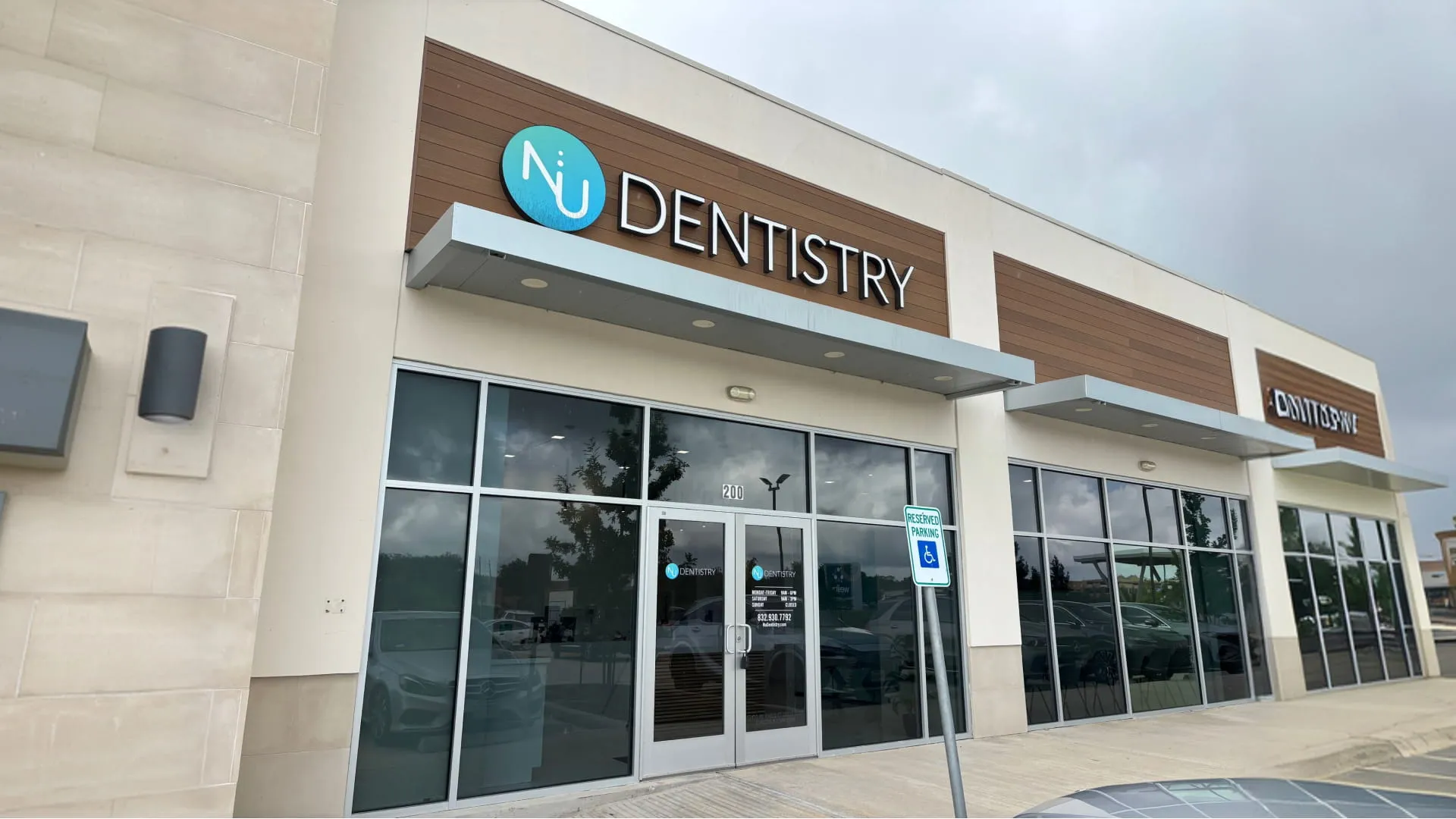
If you were a Byte patient and you're unsure what to do next, Nu Dentistry Missouri is here to help. Our team serves Missouri City and the Greater Houston area with in-office aligner treatment and comprehensive orthodontic evaluations. Contact us to schedule a consultation and find out exactly where your treatment stands — and what it takes to finish it right.
Medical disclaimer: This article is for informational purposes only and does not constitute dental or medical advice. Always consult a licensed dental professional before making decisions about your orthodontic treatment.



Tuesday 9-6pm
Thursday 9-6pm
Friday 9-6pm
Saturday 9-3pm
8145 Highway 6, Building B #200, Missouri City, TX 77459
5706 San Felipe St Ste B-300, Houston, TX 77057
23227 Gosling Rd., Suite B, Spring, TX 77389
8940 Barker Cypress Rd., Cypress, TX 77433
3201 N. Shepherd Dr. Suite 113, Houston, TX 77018
11115 W Grand Parkway S, Suite 140, Richmond, TX 77407
PATIENT TESTIMONIALS Missouri City, TX
What people are saying after visiting our dental office
CARING DENTISTS Missouri City, TX
OUR SOCIALS
Check us out and follow our accounts on the following social media platforms....